
Urban Lighting as a Component of the Open Space Revolution
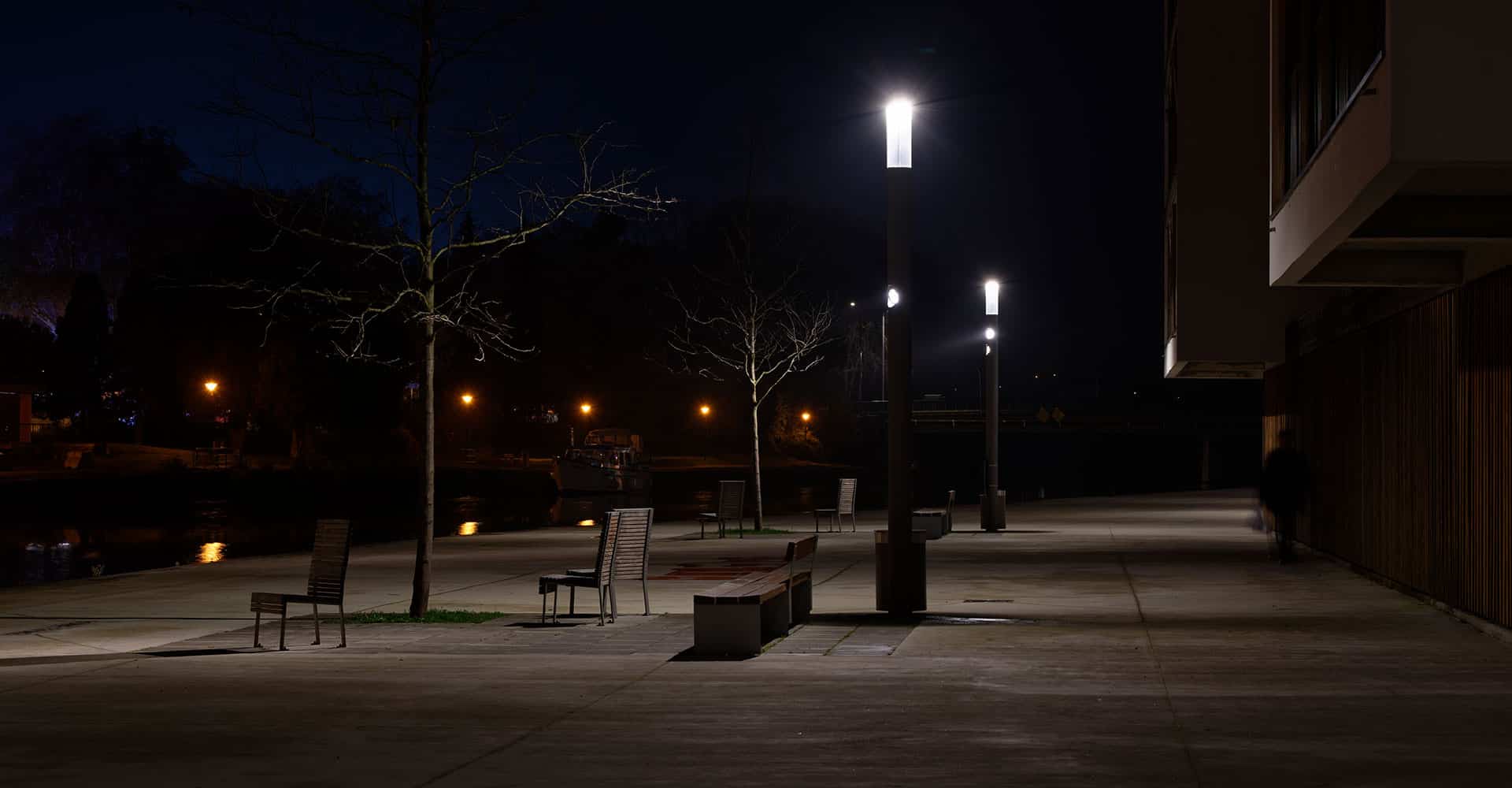
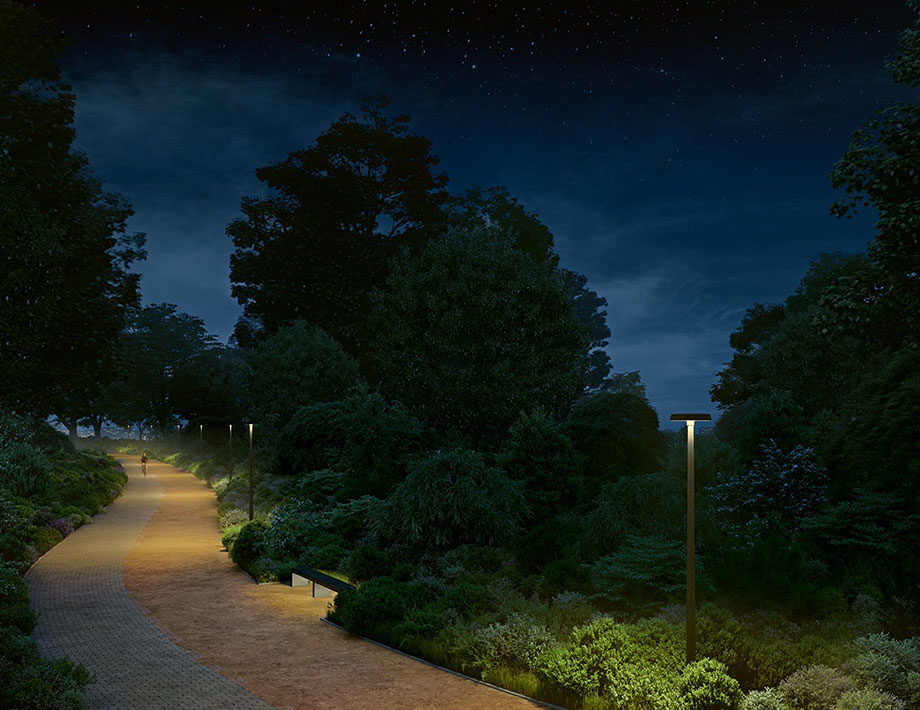
After dark, targeted lighting makes the city visible and accessible. Pathways become discernible, squares transform into gathering places, and parks become spaces for relaxation. In short, lighting makes public spaces usable even after dark. At the same time, the use of artificial lighting operates within a tension between human needs for safety and accessible paths, and our ecological responsibility toward nature and animals—and thus the preservation of natural darkness. To achieve a shift in the use of open spaces and thereby design urban open spaces that benefit both people and nature, these dimensions must be brought into balance.
Lighting for everyone—but with care
The purpose of urban lighting is to provide people with safety and guidance. Streets must be lit to a degree that allows people to see their paths, obstacles, other people and, not least, to maintain a sense of personal safety. When planning lighting, the needs of different users must be taken into account: drivers and motorcyclists, pedestrians, cyclists, older citizens, families with children and people with physical disabilities. While all these groups use the same streets, their needs differ.
But it is not only paths and streets that require adequate lighting. Light highlights and structures architecture. It emphasizes architectural features (building details, designed plazas, and public art). Light enhances the appeal of public spaces, making them usable even in the dark. It is these elements that define the unique atmosphere of a place. In architecture light can provide structure, highlight buildings, fountains, and public art, and make public spaces attractive and usable even in the dark. Ultimately, it is these elements that define the unique atmosphere of a place.
Lighting solutions are also important for nocturnal animals, primarily insects. They rely on moonlight for navigation. Over the centuries, this navigation has become increasingly difficult. The solution lies in the targeted and environmentally conscious use of lighting solutions. Responsible outdoor lighting takes into account the needs of people, flora and fauna. To achieve this, lighting must be carefully planned and used—light should only be used where it is needed. Whenever possible, the night should be left to, or returned to, the dark night sky.
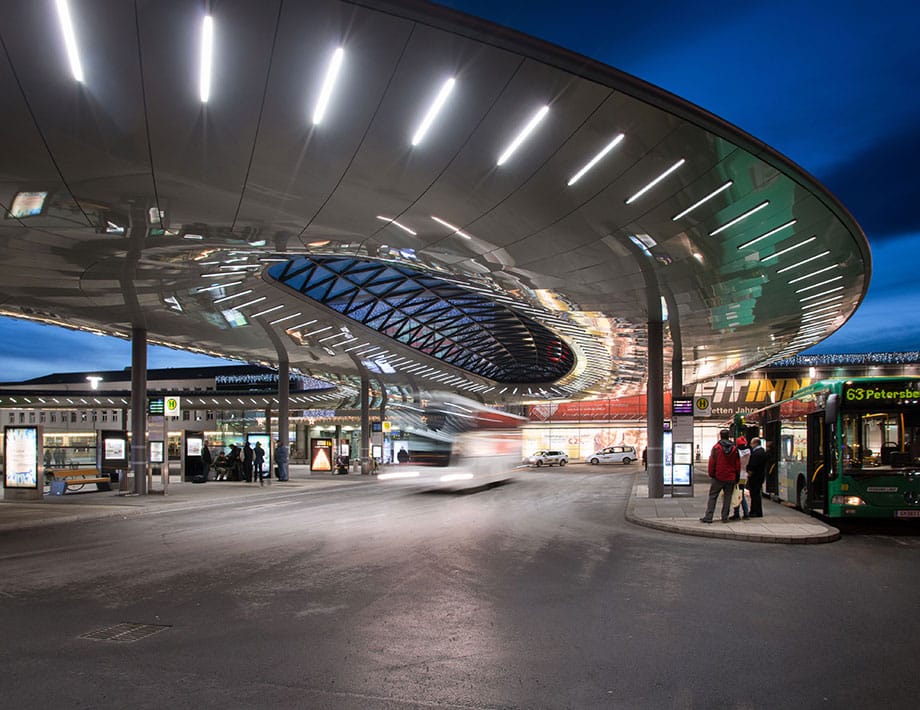
Major transportation hubs, such as bus stations, must be lit in such a way that all road users are visible and can find their way.
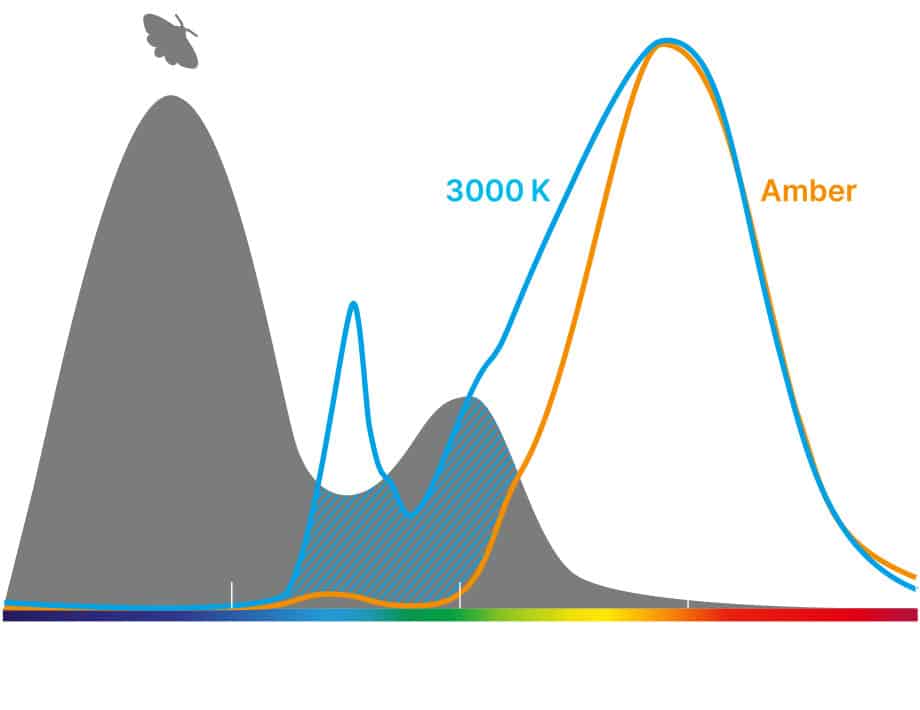
A key factor: the color temperature of the light
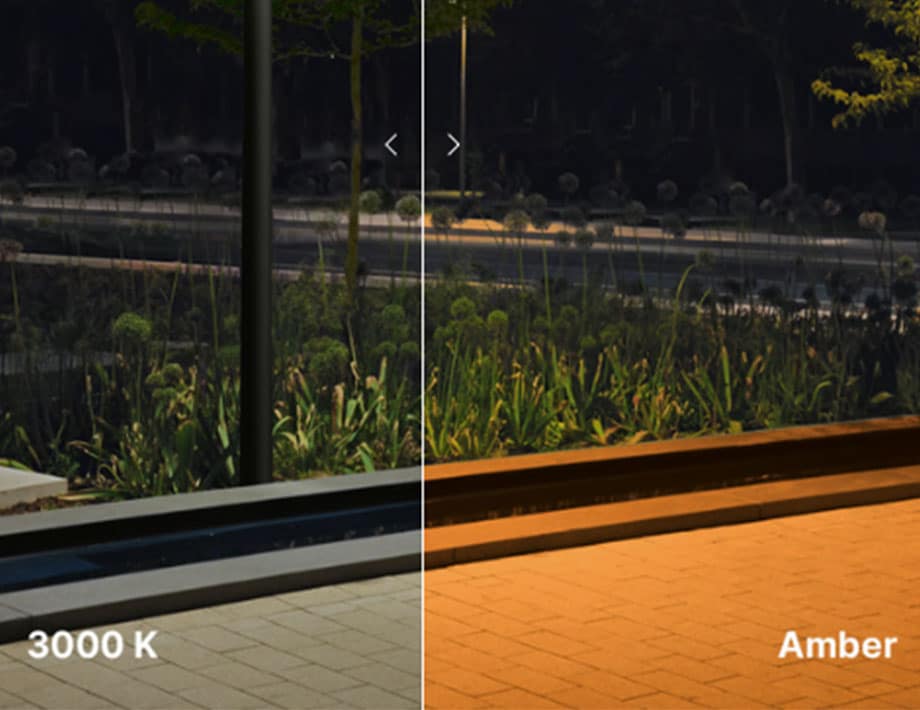
Effective lighting design involves the placement of fixtures, light distribution, the number of light sources, light output, and the color temperature of the light. The latter has a significant impact on how wildlife perceives lighting. Animals, particularly insects, are highly sensitive to short-wavelength light with a high blue light component—they are literally drawn to it. For this reason, a warm light color with a low color temperature of approximately 3,000 Kelvin or lower is recommended, especially at night. These color temperatures below 3,000 Kelvin provide warm light with a significantly reduced blue light component, which benefits nocturnal animals—while still ensuring good lighting for humans.
Even warmer amber tones around 1,800 Kelvin can offer additional environmental benefits because they further reduce the blue light component, making them less noticeable to many nocturnal insects. Lighting manufacturers such as BEGA have addressed this issue and refined their luminaires to provide environmental benefits as well. BEGA BugSaver® technology makes exactly that possible: luminaires can be switched between a warm standard light at 3,000 Kelvin and an amber hue at around 1,800 Kelvin as needed, depending on the season, and automatically via intelligent control systems such as BEGA Connect. This allows the lighting to be set to a warm light during the still-busy evening hours and switched to amber light with an even lower blue light component during the quiet night hours.
Key Considerations for Responsible Lighting
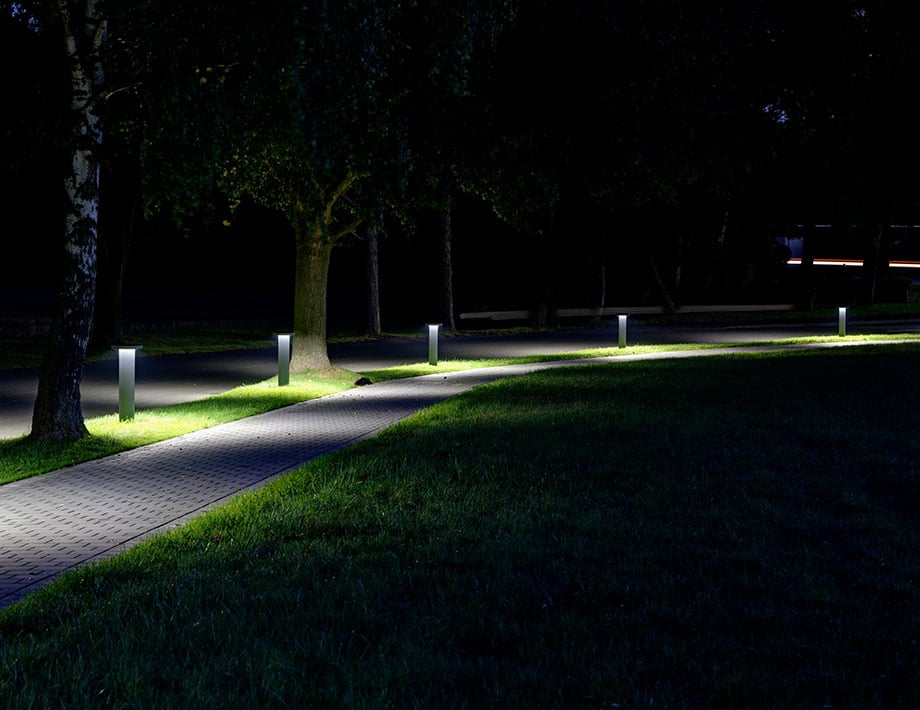
Responsible outdoor lighting begins with the principle of systematically directing and controlling light. Light should only fall on the area for which it is intended—paths, plazas, entrances, seating areas, or the building itself—and not into the surrounding natural environment or the sky. Technically, this can be achieved using luminaires that precisely direct light and minimize light diffusion. Dark-sky luminaires consistently implement this principle: they direct their light highly efficiently onto the area to be illuminated and emit less than one percent of their luminous flux into the upper half-space. This guarantees effective illumination of the desired area without lighting up the night sky—thereby enabling nocturnal animals to navigate.
Equally important is flexible control: lighting can be automatically dimmed, scheduled, or activated by motion sensors. This ensures that lights do not stay on all night, but are used only when and where they are actually needed. This combination of light direction, color selection and intelligent control can enhance safety and the user experience, while reducing environmental impact.

Two Examples – Light in the Urban Landscape
Presidio Tunnel Tops, San Francisco
A breathtaking view across the water up to the illuminated Golden Gate Bridge—this truly unique vista is offered by the Presidio Tunnel Tops, a 14-hectare park in Presidio, a historic military base in San Francisco. Spread across several levels, visitors will find barbecue and picnic areas, play areas for children and seating, all connected by numerous paths.
When converting the site into a public park, the lighting designers at HLB Lighting deliberately chose a lighting design that protects the local flora and fauna while providing sufficient wayfinding. The guiding principle: a hierarchy of light. In the upper park area, BEGA post-top luminaires with frosted glass lenses provide pleasant, glare-free illumination of the paths and gathering areas. Further down the park, BEGA bollard lights take on this task, for example, along the Cliff Walk with its views of the Golden Gate Bridge, Angel Island and Alcatraz, as well as along the Bluff Walk down to the playground. Thanks to their low profile, the light beam remains close to the ground and can be precisely directed.
The lighting is complemented by handrail lights on staircases, accent lighting beneath sculptural benches and recessed wall lights at viewing points and the Presidio Steps. Curfew controls dim the lighting in the play area at closing time, thereby limiting light diffusion into the adjacent wetland. The result is not a uniformly lit park, but a nuanced space where light serves both atmospheric and functional purposes, without unnecessarily impacting the surrounding ecology.
Ford House Visitor Center, Michigan
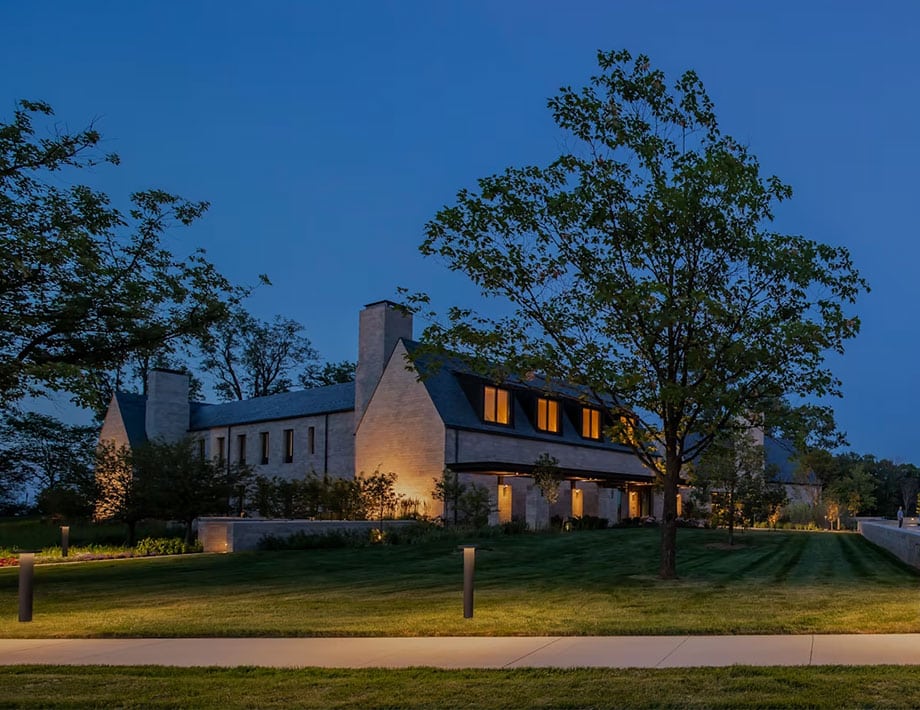
The Ford House Visitor Center in Michigan is nestled within a historic park and garden landscape. Here, it becomes particularly clear how sensitively light can interact with architecture and nature. The visitor center is part of an ensemble of historic buildings, gardens and pathways. The lighting aids wayfinding and highlights architectural details without dominating the surroundings.
Bollard lights mark paths with directed beams of light, while facades are accented with warm, subdued light. The light sources are aligned so that they neither cause glare nor shine unnecessarily into the landscape. Instead of a flat, uniform illumination, a nuanced lighting landscape emerges that respects the character of the site.
Especially in the context of historic sites, it becomes clear how important restraint is. Here, light must not be used to create a theatrical effect, but must instead be subordinate to the site. The project exemplifies that responsible outdoor lighting is not at odds with atmosphere. On the contrary: it is precisely the deliberate limitation of light that creates depth, contrast and spatial clarity.
Light in the Service of Cities and Nature
These examples illustrate: urban lighting need not be at odds with environmental responsibility. Rather, it can combine safety, quality of life and environmental awareness. The key lies in the thoughtful design of light—its color, direction, and control—within the context of the surrounding landscape and ecology.
Responsible urban lighting is not about sacrifice, but about conscious design. It creates spaces that are accessible, vibrant and safe at night, while simultaneously protecting natural habitats and processes. In this way, light does not become a disruptive factor, but an integral part of a city that works equally well for people and nature—and that is precisely the core of re:public space.