
More green, less asphalt
Today, this planning is increasingly coming under criticism. Cities are becoming unpleasant places to to stay due to intense heat stress. At the same time urban infrastructure and drainage systems are overwhelmed by heavy rainfall events – many systems are undersized, resulting in flooding of low-lying areas, flooded basements and destroyed living space. Car traffic is no longer seen as the ultimate goal – instead pedestrians, cyclists and people seeking recreation are gaining space.
Focus on traffic areas
A rethinking has already begun. Large squares and inner-city traffic areas such as major intersections and roundabouts are increasingly becoming the focus of redesign efforts. There is considerable scope for redesign here: more people, fewer cars. More greenery, less heat. But what options for restructuring the urban fabric at these often critical points are there? Two international examples show ways to a new urban reality.
Example 1: Copenhagen – a roundabout with a forest
In 2010, a devastating storm, a veritable cloudburst, left the Østerbro district of Copenhagen submerged in water. This disaster, which caused millions in damage, prompted a rethink in urban planning and triggered a large number of water management projects in the city.
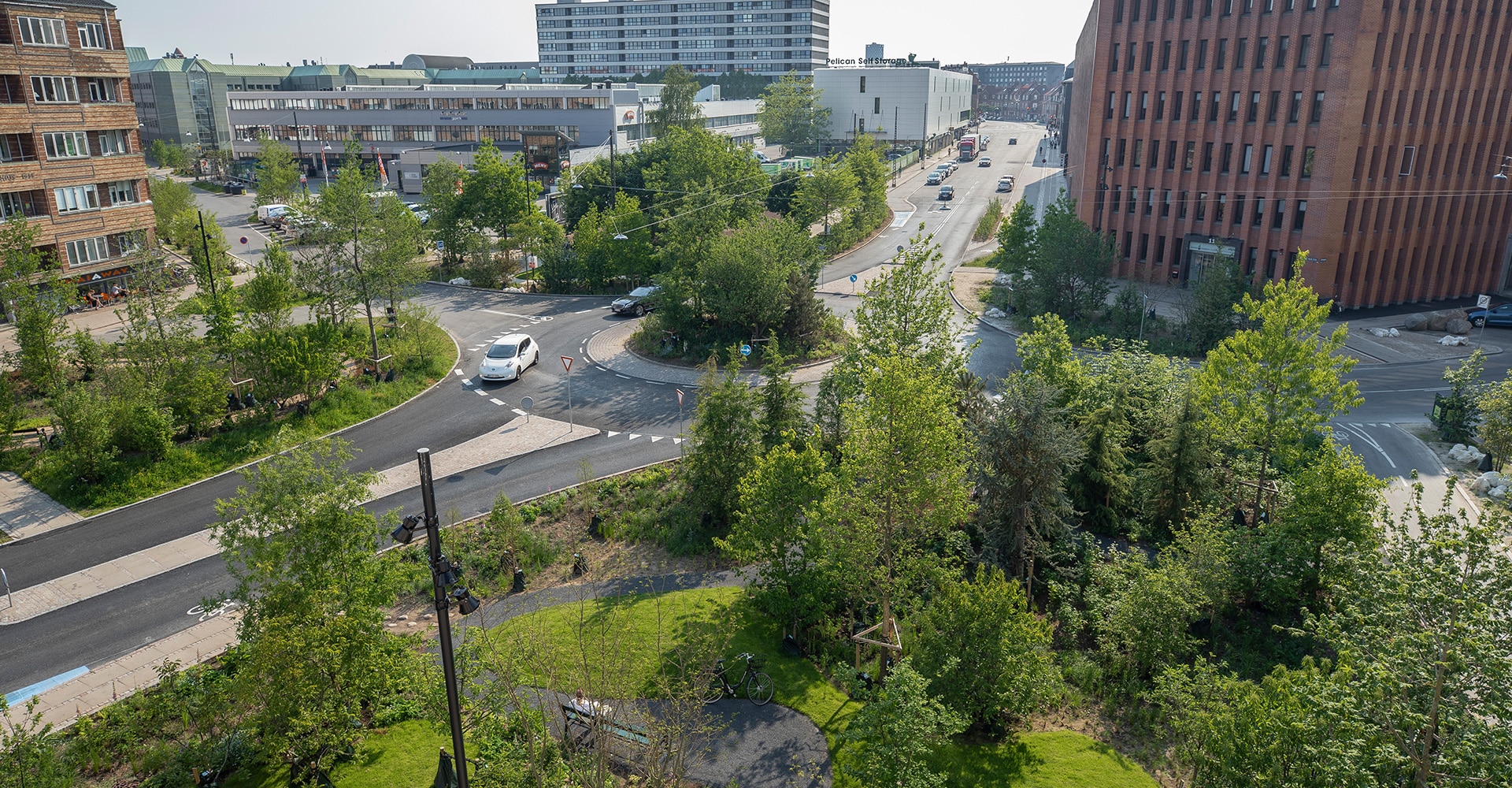
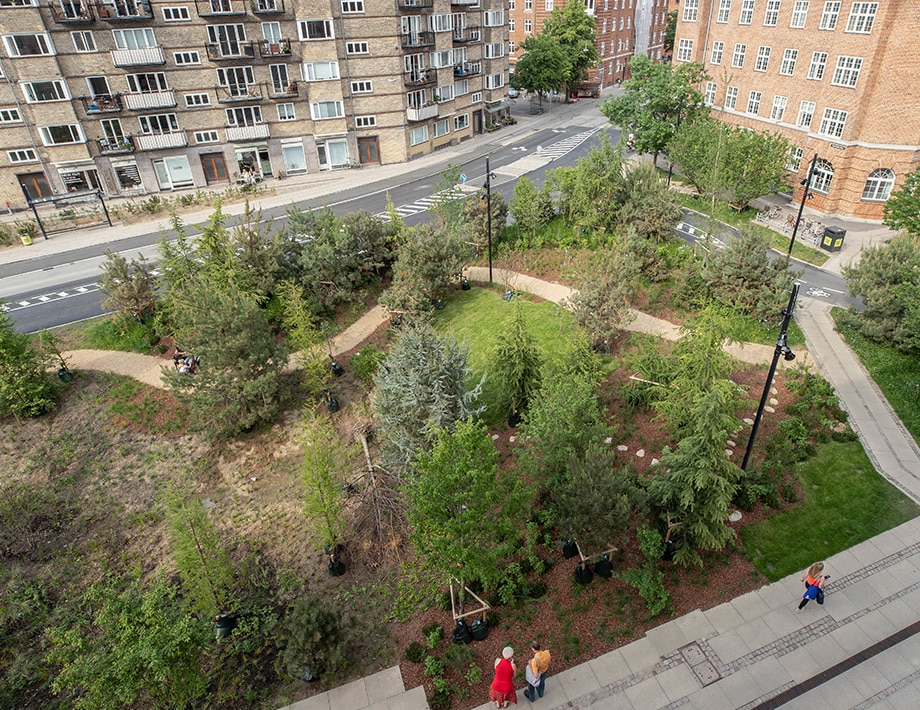
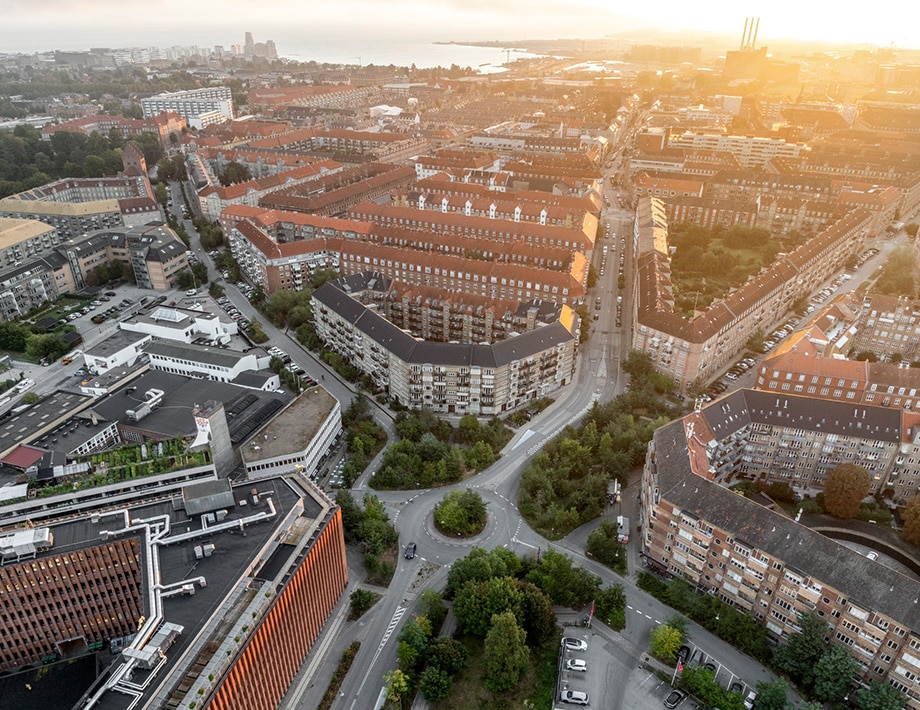
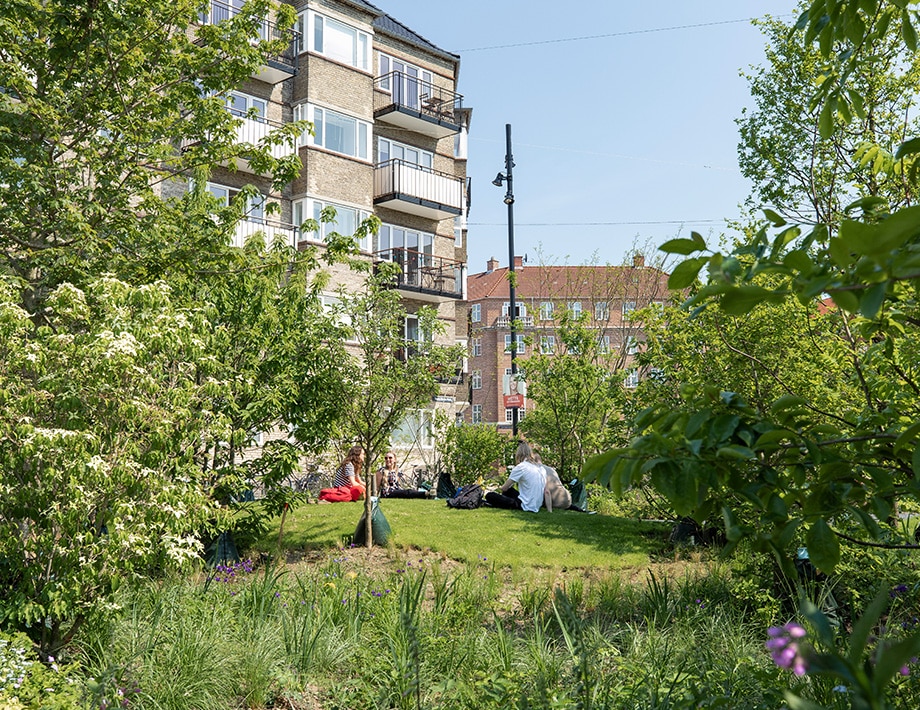
This transformation is particularly impressive at the major traffic junction of Sankt Kjelds Plads. Where asphalt, numerous lanes and parking spaces once dominated the cityscape, today numerous green spaces allow water to seep away. An area of around 9000 m²—equivalent to two-thirds of the previously asphalted area—has been converted into urban green space. The roundabout layout remained unchanged, but the trafficable area was greatly reduced. At the same time, a green space with a high amenity value was created: benches, “hidden” corners, thickets and copses – partly like a small urban forest.
Water management was also fundamentally redesigned: a first-flush stage directs the initially heavily polluted road water into the sewer system so that abrasion and pollution are discharged in a controlled manner. A second-flush stage with green rain beds, underground pipes, and channels ensures that larger amounts of rainwater are delayed or retained.
For cities with large paved areas — be they squares, roundabouts, or car-dominated intersections — this example shows that it is worth rethinking how we use space. Traffic arteries do not have to disappear, but they can be made more streamlined, creating space for greenery and water and thus combining climate adaptation with urban development. In combination with an ecological and economical lighting concept, these measures not only strengthen the climate resilience of urban spaces, but also the local community by creating holistic and valuable recreational areas.
Example 2: Place de Catalogne, Paris – Tangent instead of roundabout
Paris has also been making headlines for years when it comes to urban redevelopment. Lots of greenery, generous bike lanes and a large-scale expansion of local transport are visibly changing the city. Place de Catalogne in the 14th arrondissement near Gare Montparnasse underwent a special redevelopment and was completely redesigned. The former huge roundabout with a fountain in the middle that was no longer in working order had the same problems as many traffic junctions in the city. It was hardly a pleasant place to spend time with little shade, high summer temperatures and enormous traffic congestion.
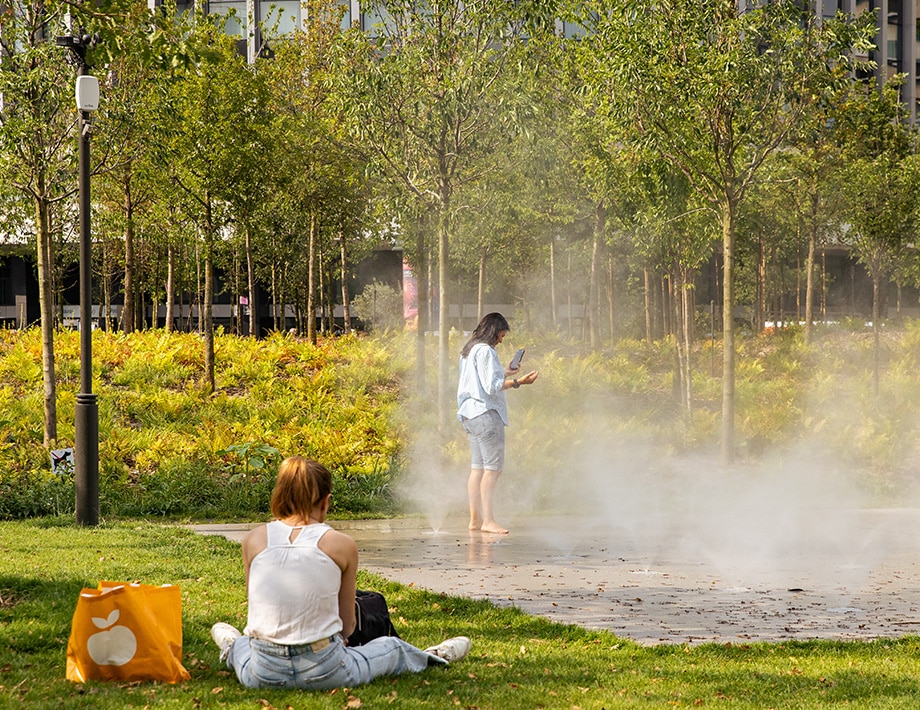
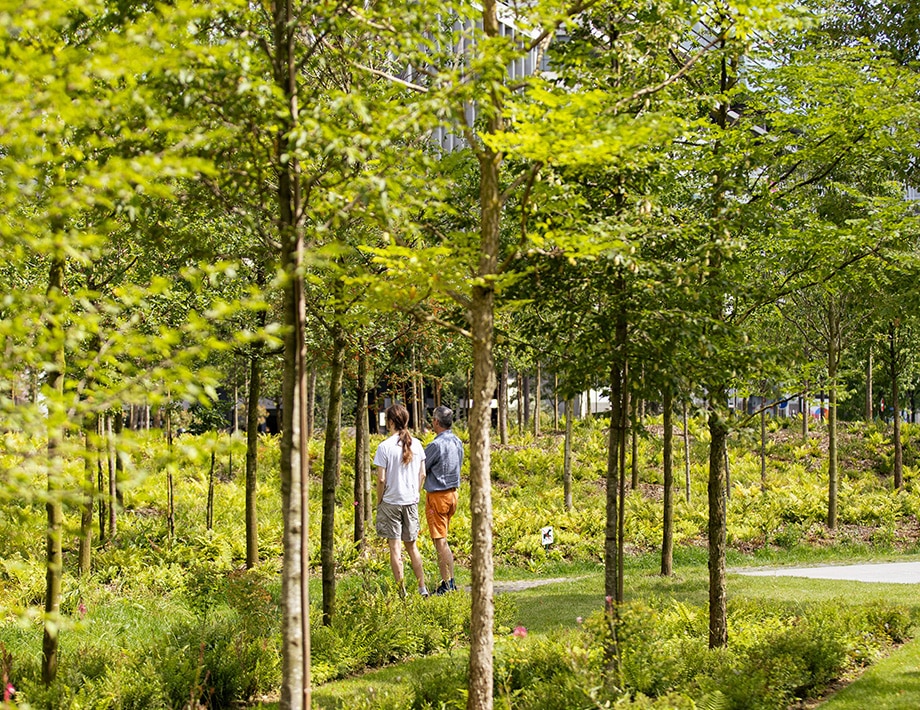
The redesign involved routing traffic through only part of the square and abandoning the roundabout. 470 trees were planted in the center of the square, including large and medium-sized trees as well as young trees aged two to four years. What once was an almost completely sealed surface is transformed into an urban “forest area” of over 4,000 m². A temperature reduction of up to 4°C is expected in the area of the new vegetation. The square used to be dominated by vehicles. Today, a wide boulevard in the southern part of the square invites visitors to linger on the terraces of the adjacent cafés and bistros.
The potential of the street
The projects clearly show how effective the targeted unsealing of urban spaces can be. A centrally located square that was previously dominated by car traffic has been transformed into a green urban forest oasis. This transformation shows the potential that such areas offer: when large asphalt areas are unsealed, shade, evaporative cooling and a new quality of life are created — important factors in reducing urban heat islands.
At the same time, it is clear that successful redesign means much more than “green instead of cars.” The interaction of various elements is crucial: the reduction of motorized traffic areas in favor of footpaths and cycle paths, new green and water structures as active infrastructure for cooling and rainwater retention and a design that enables social use — for example, through good routing, seating or catering facilities.
The case studies also show that such transformations are already being implemented today, especially in places with high heat or rainwater pollution. Prerequisites for their long-term success are the early involvement of users and continuous maintenance of the new vegetation and recreational areas. Overall, the examples show how climate adaptation, urban development and the mobility transition can merge into a holistic approach that makes urban spaces more livable.